
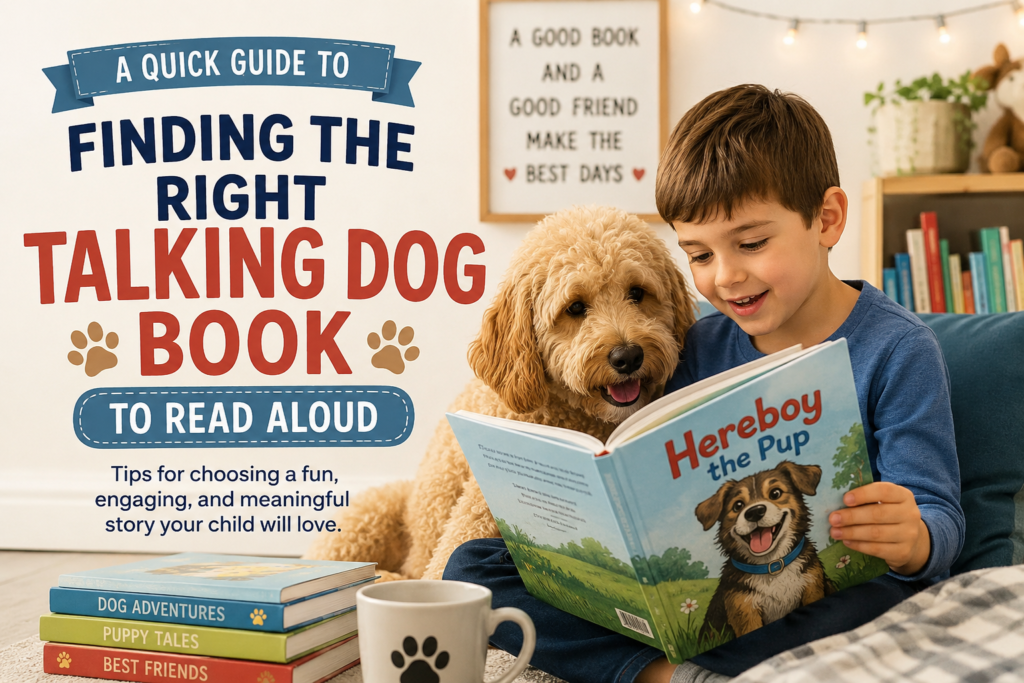
Choosing the right story for a child is trickier than it looks. Shelves are full of options, but only a few actually earn a spot in the regular bedtime rotation. A good talking dog book tends to stand out from the crowd because it gives a familiar animal a voice and personality a child can latch onto immediately, turning an ordinary evening read into something closer to a shared conversation. Knowing what separates a forgettable pick from one worth reading again and again makes the search a lot easier.
What to Look for in a Talking Dog Book
Not every story with a talking animal works equally well. The strongest examples share a few traits worth watching for before adding a new title to the shelf. Look for a main character with a clear personality, one whose voice comes through even in how the dialogue is written. Look for a story with a simple, focused problem rather than one that tries to juggle too many ideas at once. And look closely at pacing, since a story that drags in the middle tends to lose a young listener’s attention long before the ending arrives.
Illustrations deserve just as much attention as the writing. A dog whose expressions and body language carry emotion on their own gives very young children something to follow even before they can process every word being read to them.
Reading the Dialogue Out Loud First
Before committing to a new book, it helps to read a page or two of dialogue out loud, ideally the way it would actually be read at bedtime. A well-written talking dog book tends to have dialogue with real rhythm, the kind that is fun to perform rather than flat text sitting on the page. If a parent finds themselves stumbling over the wording or losing energy halfway through a page, that is often a sign the writing will not hold up over repeat readings.
A helpful example of this in practice is Hereboy the Pup by children’s author James J. Tierney, a story following a young dog whose voice comes out differently than every other pup around him. The dialogue moves with enough playfulness that it reads well cold, which is exactly the kind of test worth applying before bringing any new book home.
Checking for Staying Power
A story only proves its worth after multiple readings, so it helps to think ahead about whether a book will hold up on the fifth or sixth pass. Details in the illustrations, small character quirks, and dialogue with genuine personality all give a story more to notice over time. A spoken dog book that reveals something new with each reading earns a permanent spot on the shelf far more easily than one that feels the same every single time.
Matching the Book to the Child
Every child responds differently to humor, pacing, and tone, so it is worth paying attention to what specifically makes a child laugh or lean in during a read-aloud. Some children respond best to slapstick and physical comedy, while others connect more with a character’s inner thoughts and feelings. Testing a book against a child’s specific sense of humor, rather than assuming any popular title will work, tends to produce better results.
Finding the right talking dog book comes down to paying attention to small details: the rhythm of the dialogue, the strength of the illustrations, and how well the story holds up after several readings. A little extra care during the selection process pays off later, when a book earns repeat requests instead of gathering dust after a single night. The right pick turns an ordinary bedtime routine into something a child genuinely looks forward to.