
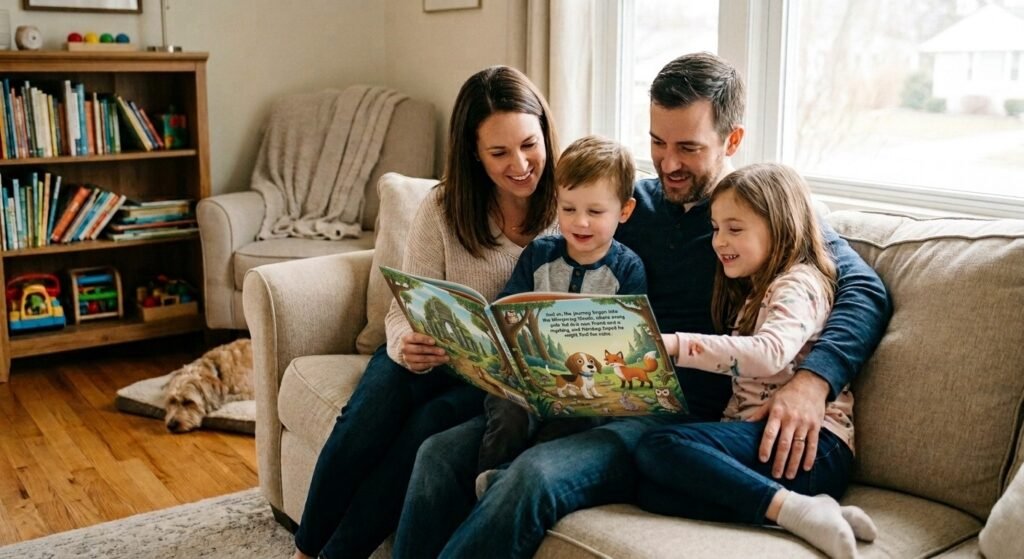
Not every book on a child’s shelf earns a second reading, but the good ones tend to share a common trait. A strong animal picture book gives children something they cannot always get from a story about people alone: distance. When a character wears fur or feathers instead of a face a child recognizes as their own, big feelings like frustration, embarrassment, or fear of not fitting in become easier to sit with. There is room to laugh at the character’s problem before recognizing it as something personal, and that small bit of distance is often what makes the lesson land.
The Case for Storytellers as Animal Picture Book
Children’s authors have long understood that animals make excellent stand-ins for human experience. A fox, a bear, or a dog can carry a story’s emotional weight without the pressure of representing a specific child’s exact circumstances, which gives every young reader room to see themselves in the character on their own terms. This flexibility is part of why animal characters remain such a durable choice across generations of children’s publishing.
The best examples in this space share a handful of qualities. The premise stays simple enough for a very young reader to follow without assistance. The main character has a clear, relatable want. And the illustrations do as much storytelling as the text itself, often carrying emotional beats through expression and posture long before a child can read the words on the page.
Why the Format Rewards Repeat Reading
A story built around an animal character tends to hold up better under repeat readings than most. Part of that comes down to pacing, and part of it comes down to how much visual detail a good illustrator packs into each spread. Children often notice something new on the fifth reading that they missed on the first, which keeps the experience from feeling stale even after dozens of bedtime requests.
One recent example that illustrates this well is a title from children’s author James J. Tierney called Hereboy the Pup, which follows a young dog whose voice does not sound like anyone else’s around him. Rather than treating that difference as a problem to fix quickly, the story lets the character sit with his frustration before arriving at something closer to acceptance, giving the animal picture book a rhythm that rewards a slower, more attentive reading.
Teaching Without Announcing the Lesson
The strongest entries in this genre rarely state their message outright. Instead, the lesson arrives through what the character experiences and how the people, or animals, around him respond. A child watching another character struggle to be understood absorbs something about patience and kindness without ever being told directly to be patient or kind. That indirect approach tends to stick far longer than a story that spells its own moral out in the final paragraph.
What Parents and Teachers Look For
Adults reading these stories aloud tend to gravitate toward ones that reward their own attention, not just the child’s. A well-constructed animal visual book holds up to a tired parent’s tenth reading of the week, offering enough rhythm and humor to keep the adult engaged even after the novelty has worn off for the child. Teachers, meanwhile, often look for stories that open a natural door to classroom discussion about empathy, difference, and belonging, without requiring a formal lesson plan to introduce the topic.
The enduring popularity of the animal picture book comes down to a simple truth: children connect with characters who feel a little removed from their own daily lives, yet whose struggles mirror something deeply familiar. Stories that get this balance right, pairing a strong premise with careful pacing and honest emotional beats, tend to earn a permanent spot on a family’s shelf rather than a single read before being forgotten.